Thursday, April 14, 2011

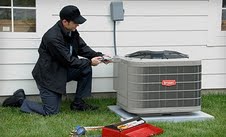
Air Conditioning Tips to Help Save Money

If you have central air conditioning or a window air conditioning unit, you can save money on your electric bill by following these energy-saving tips this summer:
  • Replace the filter monthly during the cooling season and have a professional service your system at the beginning of each cooling season. Keeping your filters clean can cut energy consumption 5 to 15%. An annual pre-season check-up by a contractor should include the following:
  1. Balancing refrigerant levels
  2. Making sure all electrical components and controls are working properly
  3. Checking and cleaning the evaporator and condenser coils
  4. Oiling motors (if applicable)
  5. Checking the thermostat for functionality
  6. Checking filters
  • Regularly make sure the condensing unit located outside is not covered up or clogged with leaves or debris. The unit needs to breathe, to draw air into the system. Not performing yearly maintenance on air conditioning units results in a 5% loss of efficiency for each year of operation.
  • Install a programmable thermostat so you can vary the temperature according to when you're home. Through proper use of pre-programmed settings, a programmable thermostat can save you about $180 every year in energy costs.
  • Plant shade trees and shrubs around your house to help reduce the heat of the sun. Close drapes on the sunny side of your house or install awnings. 
  • Make sure the cooled air coming from your air conditioning vents is not obstructed by furniture or draperies.
  • Turn off lights when not in use. Lights produce heat, which makes your air conditioning system work harder (and cost more). Your computer and other home office equipment also generate heat. Turn them off when not in use.
  • Weatherstrip all doors and windows.
One last word of advice in regular air conditioning maintenance is to ensure that your ducts are properly sealed. When cooled air leaks from supply ducts, or when hot air creeps into return ducts, this can lead to wasted energy, and an overworked air conditioner. Your ducts need to be airtight for the most efficient performance from your cooling unit.

About the Author:
Amanda Herron is a Colorado Native born in Denver and raised in southwest Colorado. After graduating from Nucla High School in 2005 she attended Fort Lewis College where she received a BA in Tourism and Resort Management in 2009. In her free time she enjoys making picture collages, playing at the river, reading, playing and watching basketball and anything to do with the Denver Broncos! Prior to becoming the scheduler/dispatcher she served on the first SCC Crew as a WX Technician.

Sources:
“Energy-Saving Air Conditioning Tips.”ecomall.13 April 2011.
Garrett, Doug. “Service Your Air Conditioner for Summer Comfort.” City of Austin Green Builder Program.13 April 2011. 

“Heat & Cool Efficiently.”Energy Star. 13 April 2011

Friday, February 25, 2011

4CORE Now in Cortez

4CORE Now in Cortez

March 22nd, 4 - 5 pm

4CORE is excited to announce the grand opening of their Cortez office this month. Come participate in the ribbon cutting, celebrate with free food and 4CORE give-aways, and learn more about the work 4CORE is doing in the Montelores Area.

Drop by the office at 10 W. Main, Suite 110 in Cortez at the Wilson Building between 4 and 5 pm on March 22nd.

Heather Wyatt, Program Specialist, will be staffing this branch office on Wednesdays and Fridays each week.

For more information, contact Heather or call 970-799-7718.

Check out this video to get a sneak preview of our new space!

Friday, February 4, 2011

REAPing an Economic Recovery

We all know that we are in a time of economic strife- nationally and locally. A lot of us are wondering, "How can we turn this around and how can I earn a living?" and moreover, "How can I earn a living while also doing something I am passionate about in my community?" How do communities encourage economic recovery that encompasses community and environment, and strives to encourage and utilize local talents, expertise, innovation and creativity? These are the questions being asked around the State and Country, and right here in SW Colorado through the regional Resource and Energy Action Plan- the REAP.

Diverse representatives from our five county region (Archuleta, Dolores, La Plata, Montezuma, and San Juan Counties, as well as the Southern Ute and Mountain Ute Indian Reservations) are coming together to create a plan that responds to these needs and desires expressed in our community by collaborating to formulate the REAP.


What is the REAP?
4CORE convened the REAP Advisory Board consisting of community representatives, including elected officials, ranchers, farmers, utilities, businesses, oil and gas representatives, non-profits, bankers, planners, educators, economic development, subject matter experts, and other sector representatives of SW Colorado and our regional counties.

REAP's  Mission is to ensure Southwest Colorado uses resources and energy effectively and efficiently to create economic opportunities and improve quality of life by developing and implementing the Resource and Energy Action Plan. 

REAP's Vision is that Southwest Colorado will REAP the benefits of effective use of resources and sustain a thriving region of rural, agricultural, and mountainous communities.

REAP's Guiding Principles:
  • Energy and Conservation Ensure significant progress toward more efficient, safe and healthy resource technologies in order to enhance, promote, and diversify the local economy and job market; support and strengthen the region’s agriculture and building sectors; and engage and integrate the existing energy industry.
  • Economic Vitality and Diversity Encourage local economic development and consumption that preserves and protects our heritage, natural resources, agriculture and energy production, thus providing opportunities for our diverse population to thrive in Southwest Colorado.
  • Infrastructure Improve, expand and diversify community systems and services, such as transportation, public utilities, and resource recovery options.
  • Vibrant and Involved Community Increase communication between all sectors and cultures throughout our region; promote education and involvement in existing and potential energy and economic opportunities.
  • Environmental Stewardship Protect, conserve, and ensure the quality of our ecological resources
              What has REAP accomplished so far?
              Outcomes from the REAP so far entail a regional Energy Assessment, profiling electrical, natural gas, and other fuels used in residential, commercial, industrial, and agricultural sectors in SW Colorado. A Community Assessment, details the goals of the REAP and what is currently happening in SW Colorado that supports the REAP. These reports will serve as the baseline foundation to build on, incorporating regional energy efficiency, conservation and economic development strategies.

              REAP next steps
              Finalizing the strategic plan and creating action plans are scheduled in the first part of 2011, so stayed tuned for more information or check out the REAP website at 4CORE.

              Monday, December 20, 2010

              Weatherization Fashion Show

              Gregg Dubit, Program Manager of 4CORE's Weatherization Assistance Program, recently presented at the Green Business Roundtable on December 8th, where he educated well over 50 local community members and business owners on "The Art of Weatherization," an informative and very entertaining presentation.

              Here are just a few of helpful tips and energy efficiency measures from Gregg's presentation:
              • Heating: One very easy and efficient upgrade is to wrap your water heater in a blanket, reducing heat loss.
              • Insulation: This one is very import. Find out your County-wide R-value recommendation to ensure the best heat retention in your home. Also, learn about the associated State rebates to save money in your energy efficient upgrade.
              • Lighting: Replace all older light fixtures, like incandescent light bulbs, with more energy efficient compact fluorescent bulbs (CFL) and reap the benefits of doing so with energy savings of 50-75%.
              • Heating: An easy thing to do is to check your furnace filter, it could be dirty and blocking up to 50% of air intake, causing it to possibly short cycle or simply not operate at full potentially and efficiently.
              Not only was Gregg's presentation informative, but entertaining. In concluding the overview of weatherization, Gregg arrived at two true or false questions, which were predominately answered as true from the crowd:


              * Fuel prices are rising and this trend will continue to rise
              * Conservation is becoming more fashionable than consumption

              And considering these two points to be true, Gregg concluded: "there should be Weatherization Fashion Shows." Here is the first ever fashion show highlighting current trends in energy efficiency:
                
              Beyond fashionable, investing in your home energy savings is just simply smart. Contact 4CORE now for more details, programs, rebates and incentives.
              Also check out The Governor's Energy Office (GEO), at RechargeColorado, who has made it easier for Coloradans to redeem more than $10 million in energy efficiency and renewable energy rebates still available across the state. Although there has been great demand for rebates, millions of dollars still remain available for: 
              ENERGY STAR Appliances:
              • Gas Condensing Furnaces (Up to $500)
              • Insulation and Air Sealing (Up to $600)
              • Duct Sealing (Up to $150)
              • Energy Audits (Up to $100)
              • Energy Monitors (Up to $100)
              • Renewable Energy technologies
              The GEO "urges Coloradans to take advantage of the rebates before funds are exhausted and winter drives up heating bills."

              Rebates are available for the following appliances:
              • Refrigerators ($50 without recycling, $100 with proof of recycling)
              • Clothes Washers ($75)
              • High Performance Gas Storage Water Heaters ($200)
              • Dishwashers ($50)
              • Gas Boilers ($400) 
              Rebates will be available until funds run out. To check if rebates are still available, check out the "$$ countdown" at RechargeColorado.com and click on the "Learn More button" under Appliance Rebates.

              Monday, November 29, 2010

              Communicating Community Values

              We can all agree that communities are greatly diverse in values and it is often a difficult task to to find collective agreements among such diversity. However, if we all try to focus on what we all do have in common and share- our universal “human needs,” the potential for finding a middle-ground, making decisions and implementing actions can become easier found.
              adapted from The Natural Step

              By drawing attention to the common thread that binds us all together- our human needs we can focus on those commonalities and find a middle ground to make decisions from. We can also create the space to agree to disagree on other differences and know that it is OK to think differently while working towards the betterment of our families, community and even world. After all, we are people who generally want the same things, we just easily get lost in the rhetoric trying to communicate these needs and wants.

              Here I list the nine universal, fundamental human needs from Human Scale Development established by Chilean Sociologist Manfred Max Neef (recipient of the Right Livelihood Award):
              • Subsistence (food, shelter, clothing)
              • Protection (safety)
              • Participation (our social nature of wanting to “belong” and have relationships with others
              • Idleness (the ability to rest and recuperate)
              • Affection (experiencing care, love and nurture)
              • Understanding (being understood and understanding the world around us)
              • Creation (to be creative and exploring the ability to create things)
              • Identity (identifying with people and the world around)
              • Freedom (being able to act and live with independently with ease
              I started thinking a lot about these fundamental human needs after the recent wave of public input period forums for the La Plata Climate and Energy Action Plan (CEAP), which took place from November 11th to the 18th in Durango, Bayfield and Ignacio. This first wave of public input forums were to introduce the community to the finalized draft of the CEAP- the GHG emission reduction targets, strategies and actions that aim to enhance our community, local environment and support a new energy economy and invite community feedback for incorporation into the community document.

              At these forums, we were reminded that some people sometimes do not respond well to certain weighted words like “sustainability,” “climate,” and “green.” This is understandable, as these are the new buzzwords that carry a multitude of varying definitions and sometimes scare people because of blurry context and misunderstanding.

              This same consideration was recently discussed in on one of the US Environmental Protection Agency’s three-part webcast series on how state and local governments can develop and build support for community-wide strategies to adapt to climate change and communicate the impacts effectively to communities.The webinar Climate Impacts & Risk Communication paralleled our CEAP public input period experience in that three experts discussed the importance of effectively communicating climate change to communities through focusing on the positive and basically, human needs, as discussed above.

              Instead of focusing on difficult terms, ideas and theories, it may be more effective to focus on supporting “strong economy,” “thriving and healthy community”, “community self-reliance”, a “healthy and productive environment”, “clean water” and “healthy people.” Notice the word healthy repeats a few times. These may be a little easier to hear and understand because we all want these things and they come across as straight forward, not weighted with mysterious political agendas. The CEAP does aim to communicate these importance’s, yet we are still harvesting feedback that helps the document speak to all necessities, concerns and considerations.
              visual from the CEAP
              Overall...

              We all want the same things for ourselves, our families, our community and hopefully the world. We just often get caught up on the verbiage, the rhetoric and linguistics in trying to communicate these needs and avenues to obtain and retain them. Trying to define and communicate the importance of climate change, adaptation, mitigation and sustainable development is difficult. However, if we can identify and simplify the things we all cherish in life, it becomes a little easier to find our commonalities and agree to disagree on all other things.


              picture by Tom Lane
              Want to know more about the La Plata Climate and Energy Action Plan? Visit the CEAP homepage, and feel free to contact us by emailing or calling (970-259-1916 x 122).


              About the Author...
              Elsa Jagniecki began working for 4CORE last month and since has enjoyed working on the La Plata Climate and Energy Action Plan (CEAP).

              Elsa has recently returned from Sweden where she studied her Master's in Sustainable Development and researched Sustainable Community Renewable Energy for her thesis with two other classmates, where they toured Sweden, Denmark, and Germany and from their research designed The SCRE Tool. 

              Thursday, October 14, 2010

              Sustainable Warming

              The leaves are changing color and cooler weather is upon us here in La Plata County.  We all are beginning to cut and stack firewood, top off the propane tank, check our furnaces, fireplaces and equip our homes with the needed measures to ensure the optimal deliverance of warmth in the months to come.

              As we prep our homes for the coming of colder weather, there are some helpful practices for ensuring energy efficiencies and equally, cost savings when we go to turn on the heat this winter. One of the biggest ways to save energy and money is to consider weatherizing your home. Weatherization, as Beverly explained in the last post- Weatherization- more than comfort and safety, is a means of making your home more energy efficient. One way is to utilize local resources that already have the steps all mapped out. Visit the Weatherization Assistance Program page at 4CORE and learn more about what it is like to have your home weatherized. Maybe you even qualify for 4CORE Weatherization Services.

              How to test household efficiency?If you don't qualify for the Weatherization Program, there are rebates through Recharge Colorado for doing an overall energy assessment to find the best ways to make improvements and upgrades. This could include insulation, heating units like furnaces, household appliances like refrigerators, sealing air leaks, changing old light bulbs to compact fluorescent light bulbs (CFL), installing storm windows and doors.

              There are many organizations offering easy-to-use guides and resources to help your household become more efficient and sustainable. One site that I think really offers a lot of helpful information is the U.S. Green Building Council’s Green Home Guide.


              Here they offer the opportunity of asking professionals questions concerning the building and/or maintenance of an efficient home. They have guidance on types of homes- new or old, rooms (bathrooms to nurseries), appliances, interior and exterior paints and facades, homeowner situations and general energy efficiency insight and guidance. They also provide 9 Ways to Make Your Home More Energy Efficient, similar to the measures mentioned above with some insightful additional strategies.

              Also, The US Department of Energy has a great Do-It-Yourself Home Energy Assessment guide which leads one through an essential step-by-step process. Home Energy Saver is also a resourceful website, sharing different strategies, tips, incentives, and current State and Federal rebates.

              Efficiency and Beyond...
              Maybe you are thinking about generating some of your own energy? A local Durango woman, Kathleen Adams, began to think the same thing and started working towards efficiency by first getting an energy audit to best understand her baseline demand for energy and inefficiencies. From there she began to upgrade her 1920's bungalow home into an energy-efficient model home, which was recently featured in 4CORE's Energy Tour. The Energy Tour brought many community members together to learn how Kathleen, among many other home owners, devised ways to save energy and money and set-up their own solar photovoltaic systems.

              Kathleen installed a 10-panel 2.1 kw solar photovoltaic system on her roof along with two solar tubes for free and easy day lighting. Kathleen now enjoys not paying utility bills from spring to fall and watching her meter run backwards when she produces more energy than she uses and more than anything is reassured knowing that all the energy she produces and sources from the local utility company is not 'going out the door.'

              Wondering about how to assess your own potential for solar and/or wind energy generation? A great source to check out for your on-site residential generation is through the National Renewable Energy Laboratory’s“In My Backyard” (IMBY). Check out this online tool that helps you gauge either your solar photovoltaic (PV) array or wind turbine electricity generating capacity based on your specifications of system size, location, and other variables.

              About the Author...
              Elsa Jagniecki began working for 4CORE last month and since has enjoyed working on the La Plata Climate and Energy Action Plan (CEAP).

              Elsa has recently returned from Sweden where she studied her Master's in Sustainable Development and researched Sustainable Community Renewable Energy for her thesis with two other classmates, where they toured Sweden, Denmark, and Germany and from their research designed The SCRE Tool.

              Monday, October 4, 2010

              Weatherization- More than Comfort, Safety, and Saving Money

              Sherry Cuthbertson is a recent weatherization client in La Plata County. She is a single woman who has health issues that prevent her from being employed. She read in the local paper and was also told by her social worker about the Weatherization Assistance Program. She made a call to 4CORE and was approved to have her home weatherized. It took about one month from her initial contact (she was out of town) for the work to be initiated. She described the service as being “really fast!” between the first evaluations, repairs commencing the following week, and job completion in two and a half days.

              Sherry resides in an older mobile home which is in overall good condition; however, upon the initial audit, it had many areas in need of improvement, which the weatherization crew could provide. The roof had been replaced 2 years ago but the leaks had compromised the indoor ceiling, and there were indoor air quality issues caused by the hot water vent pipe that was not connected properly. “It was a miracle they came”, she stated. Sherry has been on supplemental oxygen for a year and a half due to health concerns, and she did not have a carbon monoxide detector or a functional smoke alarm. There was evidence of carbon monoxide leaking from her furnace, and the weatherization crew rectified the situation.

              Sherry’s natural gas forced air furnace was replaced with a more energy efficient one, and both her water heater and furnace were repaired with emphasis on proper venting and safety provisions. The ceiling was structurally re-supported and insulating “burrito” blankets (pictured above) were placed in her crawlspace next to the skirting to insulate the home from convective air loss. “I know my ceiling is not going to fail, and I think the “burritos” will really help with insulation,” Sherry stated. She said the crew explained every step fully, and admitted the roof was a real challenge. “They were so nice!” She was very pleased that the crew completed their job while leaving her home vacuumed, clean, and in the original condition as when they began the work.

              Sherry has recommended the service to others. “The crew is working on a friend’s house now. This was nothing but a blessing. It made me feel so humble. It was a pleasant experience, and they were kind. I was so pleased, and I would recommend this to everyone!” She does not know yet what a difference these services will make in her utility bills, but she is hoping for a warmer winter and is very grateful. “They even asked if I wanted them to repaint!” Although she is struggling to get by, she described the free weatherization as “a little ray of sunshine” coming in to her life.

              Weatherization provides protection of a building from the elements and helps reduce energy consumption while optimizing energy efficiency. Building energy usage in the United States contributes greatly to air pollutants and energy waste. The US Department of Energy (DOE) Weatherization Assistance Program (WAP), created in 1976, provides assistance to low income families to reduce their home’s energy usage and improve their comfort level and safety. Four Corner’s Office for Resource Efficiency (4CORE) is the WAP source for the five county area  in Southwest Colorado. Not only does this assist our residents by improving their health and safety, it also helps reduce our country’s dependence on foreign oil, and  ultimately, air pollution.


              About the Author:

              Beverly McAllister has volunteered and worked for 4CORE since May 2010, as an Intern for both the Office and the Weatherization Services. After having been a resident of the region for 30 years and raising her three children here, she considers it her home. Her interests include skiing, camping, music, and many artistic pursuits.