Thursday, April 26, 2012

Facing Water Facts


Water use in SW Colorado

Almost 87% of our water use in Colorado goes toward agriculture. The next highest use is 6.7% for municipalities- and that includes your water use at home (Citizen's Guide to Where Your Water Comes From).
   
In 2003 and 2004 a landmark study called the Statewide Water Supply Initiative evaluated our water use and predicted regions of the state that would experience shortfalls by 2030 based on growth and use patterns. Our region is expected to have the 3rd largest shortfall in the state (26%), trailing only behind two basins on the front range. 

With this in mind, there are local opportunities that exist for you to be involved in. 

The River Protection Workgroup is a community-based, collaborative process discussing protection measures for rivers and streams.There are two work groups meeting monthly. One for the Piedra river and it meets in Pagosa Springs. The other is for the Animas and meetings are in Silverton. Click here to learn more!

Local Events
Dolores River Festival, Saturday, June 2nd
Animas River Days, Friday, June 8-10, which includes the
Reel Paddling FestivalFriday, June 8

Finally, here are a few tips to conserve water this summer:

  • Water your garden or lawn in the evening or early morning.
  • Install a low-flow shower head (this can save you $150 per year in utility costs!)
  • Shorten your showers.
  • Water for longer with less frequency.
  • Incorporate native plants that require less water.
  • Fix your leaky faucets (the average house wastes 10,000 gallons per year- enough to fill a swimming pool!)

Wednesday, April 18, 2012

Resource and Energy Action Plan Update: Health as a Resource

The Resource and Energy Action Plan (REAP) has recently been updated with revised dates for the REAP goals, an updated "Desired Project Inventory" for Southwest Colorado, and, the most notable edition, a new section on health.

A Little History:
In October of 2011, our REAP Advisory Board, consisting of leaders from across our five-county region, was polled about incorporating two sectors into the REAP: Health and Arts and Culture. The idea behind adding these elements was to address all aspects of sustainable resources in our region, not just energy. Survey results indicated that the board was in favor of including Health, but that Arts and Culture was too far afield.

Help from Consultants:
Healthy Community Solutions (HCS), a local consulting group, drafted a new section of the REAP on the Energy-Health Nexus, focusing on how energy fuels transportation, homes, cities, AND our bodies. The health industry is very dependent on electricity, natural gas, plastics, and other fuels and materials that are energy-intensive.

HCS focuses on using Health Impact Assessments (HIAs), which examine projects, plans, and policies through the lens of health.

Find out more about the REAP process, resource initiatives, and download the updated REAP.

If you have any projects to add to the "Desired Project Inventory", want a free REAP sticker, or are interested in getting involved with setting the direction for resource use in our area, contact 4CORE!

Thursday, March 29, 2012

Resource Recovery Park: A Waste-Reducing Project in the Works

Americans are currently producing an average of 4.4 pounds of waste per person per day. In La Plata County alone, this means we are producing a ton of waste every 12 minutes, enough to fill more than 2,000 semi-trucks every year. When the waste from Archuleta and Montezuma Counties are included, we produce a ton of waste every 7.5 minutes, enough to fill 3,500 semi-trucks annually. Unfortunately, rural residents generally produce more waste than urban residents, so our waste problem is actually larger than the 4.4 pounds per person per day would suggest. Finally, the recycling rate in this region is half of the state average and five times lower than the national average.

Landfilling Municipal Solid Waste (MSW) constitutes both an environmental and economic liability. The environmental consequences of landfilling our waste include air and water pollution. The pollution occurs locally as greenhouse gases escape into our atmosphere and leachate seeps out of the landfill, as well as globally when new materials must be extracted and refined to replace the resources we waste.
Furthermore, landfilling waste robs potential small businesses of valuable raw materials and maintains only three full-time jobs at the Bondad landfill; one gate attendant and two equipment operators. Even though our community currently only recycles about 4.3% of our waste, we already maintain 18 full-time jobs in recycling and many more in reuse. Continuing to send the majority of our waste to the landfill will not contribute to the economic development of our region.

A Resource Recovery Park (RRP) is currently being proposed in our region that could be a potential solution to waste and economic development issues. An RRP would provide a better outlet for all recyclable and reusable material resources, by expanding recycling services to meet current and future demand, and by increasing opportunities for employment and self-employment.

A Resource Recovery Park is a co-location of reuse, recycling, composting, manufacturing, and retail businesses in one central facility, where the public can bring all their waste and recoverable materials to one convenient location.  The proposed RRP would include a regional recycling facility, a buy-back facility, a compost center, a compost-powered green house, a center for hard to recycle materials (CHARM), and a green business incubator program, among others.

Municipal Solid Waste (MSW) is filled with valuable materials that can become an economic asset rather than an environmental liability. When collected with skill and care, and upgraded with quality in mind, these discarded materials can become the foundation for a variety of local reuse and recycling businesses and products. In this way, recycling is an economic development tool as well as an environmental tool. Reuse and recycling offer direct opportunities for our community to build the local economic base by generating local revenue, expanding small business opportunities and creating jobs. Creating a Resource Recovery Park will create design, engineering and construction jobs from the start, green-collar jobs and careers once the RRP is operational, and finally white-collar jobs and careers once we become a best practice community.

Monday, March 26, 2012

A Closer Look at the Energy Efficient Hotel Industry

When you stay at a hotel for more than one night, do you toss your towel on the floor, or do you hang it up for a second use? Most people do not do the simple act of re-using towels, which accounts for an extra 17 gallons of water to wash towels per room. Millions of gallons of water can potentially be saved by reusing towels at hotels. There are multiple hotels in the region that have “gone green” including the historic Strater Hotel, which has received the acclaimed EPA Energy Rating for their efforts. Other awards have been donated to hotels and motels in the region, from the Green Eco-Leaf Rating to being members of the Green Hotels Association.

There are a lot of times that people overlook hotels going green. This is a huge effort on the hotel industry’s part for bettering the economy and reducing their carbon footprint. According to recent statistics from the US Lodging Utility Expenses, electricity costs take up nearly 61% of total expenses.  It is also found that by investing in efficient choices for hotel, these investments nearly all paid off in 3 or less years and reduced greenhouse gas emissions by up to 75%.


A great example of these investments is the Marriott International’s. This hotel won the respectable reward of ENERGY STAR Sustained Excellence designation in 2007. It was found that in 2006 alone this Marriott saved over $6 Million as well as reduced greenhouse gas emissions by 70,000 tons. In order to achieve this sustainability the Marriott installed 450,000 CFL’s, converted outdoor sings to LED’s and fiberglass lighting as well as implemented water and energy efficient laundry systems. All of these changes were of no inconvenience and found to be virtually unperceivable to guests, yet amounted in a 2% reduction in greenhouse gas production per room!

On average, hotels have a 57.6% occupancy rate, accounting for nearly half empty rooms at a given time, which accumulates in unnecessary energy used to maintain those rooms’ conditions. Las Vegas is considered the second largest tourist destination in the nation, behind Times Square, NY; yet Las Vegas has a shocking recycle rate of 99%. Not only is this number surprising, but also extremely necessary for Las Vegas’s location in the expansive Nevada drought. In a lot of ways, Las Vegas Strip is leading the way for hotel industries around the world in terms of resourcefulness and efficiency.

Another example of how hotels are becoming more efficient is the Radisson LAX. This hotel has installed a system called Evolve Energy Management Systems (Evolve EMS). This system has been installed in over 580 guestrooms. The Evolve EMS system controls all lighting, televisions, temperature and energy controls of the room by inserting the room key into a slot when you enter the room which turns all lighting and energy controls on for the room-holder to adjust accordingly. When the card is taken out of the slot when the guest leaves the room, all lighting and energy is shut off, and temperature is set 5 degrees lower, saving over 30% energy usage per room, again at no inconvenience to guests.

There are countless ways for hotels to become more energy efficient without impacting guest comfort. A lot of hotels are beginning to look long term into efficient solutions that can save the hotels millions of dollars and reduce carbon footprints drastically. Especially when it can be calculated that there are 4,204,151 people sleeping in a hotel in the US every night (Tamika Figgs from the AH&LA Information Center).

About the Author
Lily Oswald is a junior at Animas High School participating in the Leading Internships for New Knowledge (LINK) program. Through community involvement, students learn to thrive in a professional setting and connect their coursework to their experiences in the working world.Learn more about Lily and her work at Animas High School by checking out her on-line digital portfolio

Monday, March 5, 2012

Greening the MLS

There is a shift across the US as Realtor organizations add "green" to the Multiple Listing Source (MLS). It’s happening quickly, but the story goes back a lot longer.

A few years back buyers from many walks of life started looking for new features in a home. ENERGY STAR did a lengthy survey of consumers nationwide and found that 92% of them look for “green” in a home. It doesn’t mean that’s all they want. But they added that to the wish list they bring a builder or a Realtor, along with the views, the deck, and the garage for all their sports gear.

Some people want a home to be efficient and have low heating bills.  Some people want their home to have less cost of replacing parts over the years- like the windows and siding. Some want their air inside to be clean just like our air outside is. So that’s how the building industry came up with dozens of ways of categorizing and rating both energy efficiency, and even further, a green-built home or neighborhood. People started asking for “green” to be added to the mix. 

The market responded! In La Plata County there are over 250 homes that have been built to third-party certified green-built standards, like ENERGY STAR, Built Green Colorado, or LEED. On top of that, dozens if not hundreds more have at least an aspect, or feature, of their home dealing with sustainability including everything from solar electric to energy efficient windows. This created a problem. The MLS is a way we Realtors, appraisers, and others in the real estate industry communicate. It is how we search for homes for sale, how we decide how much they are worth, and how buyers are able to get mortgages. There is a category for everything from address to searchable fields for location to whether it is waterfront, but unless you know all the places to find a green built home and what it includes, you couldn’t search for one. How do you search for a healthy home?

Appraisers had a home that was LEED certified and they didn’t know where to look to find another to compare it to.  So if they appraised a green-built home they would compare it to another home built to La Plata County code. This wasn’t a local problem only. Nationally at the end of 2010 less than 5% of MLS’s had a way to categorize green-built homes. This had to change, and it did very rapidly.

Locally, we worked on the Climate and Energy Action Plan in our county with a dedicated group of volunteers from across all parts of our community which 4CORE helped facilitate. With the signing of the U.S. Mayor's Climate Protection Agreement, La Plata County, the City of Durango, and the Town of Ignacio resolved to develop a local climate and energy action plan with specific policies and programs to reduce greenhouse gas (GHG) emissions.We created a plan for over 100 measures of bringing sustainable practices to our county. In the Residential, Industrial, and Commercial group, which I worked with, these measures range from new construction codes, standardizing energy mortgages, and educating Realtors, homeowners and builders. Greening the MLS stood out as something that needed changing. 

In La Plata County, our MLS is shared with six Realtor Boards from Montrose all the way to the San Luis Valley, and it’s owned by a corporation in which Realtors from each member Board govern. Attempts had been made to add green features to the MLS, but these boards didn’t all see the reasoning to spend the money to reprogram the system since some areas have lots of green building, and others in very rural areas have little if any and they all had to share the cost.

In 2010 a grant through the Governor's Energy Office (GEO) became available because Colorado also found that greening the MLS’s was a key missing in the future of more sustainable building. They gave grants of a few thousand dollars to MLS’s to reprogram their system and add these new items. People talk about how much money it takes to make serious changes in the world of business, but this few thousand dollars gave our part of the state enough of a reason to make serious and comprehensive changes in our MLS.

Realtors and appraisers in all of these areas I mentioned now can search only for homes with a HERS rating, even in a particular range (for example between 41-80) or they can look for a home with a certain feature like being made from materials with low-volatile organic compounds (VOCs).  Appraisers can now find comparable sales. 

The next steps include educating the industry and showing that green built homes have value. Seattle was one of the first cities that added green-built home categories to the MLS. In the first year of tracking it they found third-party certified green-built homes sold for a 10.5% premium, and stayed on the market 24% less time. Being able to prove a cost value to the benefits of living in a green-built home convinces a lender to write a mortgage for it, and shows a builder a reason to spend the extra time, money and especially the expertise they require to build homes this way. The GEO, our MLS, and 4CORE is now building a database to see if green built homes here sell in less days on the market, or a higher price, or both!

Imagine how these numbers are convincing builders to build green, and convincing buyers that a green investment makes investment good sense all around. Someday, maybe very soon, we'll be able to show green built homes have more durability, health benefits, are better for the environment and community, save money on utility bills, and command a higher price on the market. 

Because that’s how it should be, right?

About the Author

Heather Erb has been a Realtor for 10 years with Coldwell Banker, she’s the Past President of the Durango Area Association of Realtors (DAAR), and the 2011 DAAR Realtor of the Year. She is the Past President of the Colorado Real Estate Network (CREN)–an MLS corporation providing 1,500 people through the western slope with MLS service, and currently the Vice President of La Plata Electric Association. She speaks regionally about green building and the market, and was the Vice Chair of the steering committee of La Plata County’s Climate and Energy Action Plan, CEAP. Heather was instrumental in a Green Feature Initiative- creating green fields for the MLS in southwest Colorado. She can be found on her blog.

Wednesday, February 22, 2012

Durango’s West Building Earns EPA ENERGY STAR Certification


The U.S. Environmental Protection Agency (EPA) has awarded its ENERGY STAR® designation to Durango’s West Building, a four-story commercial office building located in historic downtown Durango.

Constructed in 1959, the iconic West Building is one of Durango’s oldest office buildings and likely the first of its kind constructed using a curtain wall system -- whereby the exterior walls are non-load bearing and merely keep out the weather.

In 2007, Marie Leslie, building manager of the West Building, contacted Jeremy Rivera Consulting, LLC to assess building efficiency and to make recommendations for improvements. An energy audit and analysis was performed using a computer model to predict the results of various energy efficiency improvements. The study revealed numerous opportunities to improve the building’s overall efficiency and comfort, as many of the building’s systems were at the end of their useful life.


Starting in 2008, the building underwent a significant overhaul to its Heating, Ventilation and Air Conditioning (HVAC) system, designed by Dan Hopper of Animas Engineering. The HVAC renovation provided significant energy savings and greatly increased comfort for the tenants, but building owners did not stop there. In 2010, they completed a comprehensive lighting retrofit, which immediately resulted in a considerable reduction in energy consumption.


As a result of the HVAC and lighting renovations, the West Building received its ENERGY STAR rating in January 2012, and is rated to perform better than 84-percent of commercial office buildings nationwide. The building has reduced its annual energy costs by 40-percent and provides a greatly improved environment for its tenants. Energy savings include a greenhouse gas reduction of 813,498 pounds of CO2 per year, equivalent to the amount of electricity consumed by 386 single-family homes.

“The West Building has made sustainability a core component of our goal to be a good steward of the environment,” said Marie Leslie, building manager for the West Building. “In addition to a building-wide recycling program, we purchase renewable energy credits from LPEA and 100-percent of our electricity consumption comes from green sources.”

In 1959, initial tenants at the West Building belonged to petroleum companies developing oil and gas discoveries in the San Juan Basin. Today, the West Building continues its tradition with energy-related occupants of a different variety. 4CORE, a 501(c)(3) non-profit, works with local municipalities and companies throughout Southwest Colorado to help residents save energy and energy costs, reduce the use of natural resources, and enjoy a better quality of life. 


“4CORE applauds the West Building (and our landlord) for investing in these vast improvements and receiving the prestigious ENERGY STAR award,” said Greg Dubit, Executive Director with 4CORE. “The energy efficiency measures create substantial savings on energy costs and the building is far more comfortable for the tenants that work here everyday as a result. The West Building provides an excellent example as a leader in energy improvements for other area businesses.”


Further improvements are being considered for the West Building, including installing occupancy sensors to further increase the lighting system efficiency. The West Building owners include Frank J. Anesi, Maynes Family LLC, Thomas Shipps and Janice Sheftel. For more information about the West Building, please contact Marie Leslie.

Monday, February 13, 2012

Ag Energy Workshop Summary

Hyro Turbine
Did you know that the Towaoc Canal in Montezuma County produces 11.5 megawatts annually? This is information presented at the Ag Energy Workshop on February 6th put on by Colorado State University (CSU) Research Center and 4CORE in Cortez at the Lewis-Arriola Community Center. The agenda included agricultural energy audits, solar power, micro-hydro power, and biodiesel which were broken down into understandable technologies. CSU brought in speakers specialized in each category, providing potential funding opportunities, applications and feasibility of each technology.

Michael Kostrzewa, who co-directs the new Center for Agricultural Energy for CSU spoke about the importance of agricultural energy assessments. He defined energy assessments as a “systematic way to review the energy consumption and costs associated with the equipment, operations, and culture at a facility". He referred to energy assessments as “the veggies of the meal with renewable energy being the dessert”. Mr. Kostrzewa emphasized, just as 4CORE does, that the first step towards energy efficiency is an energy evaluation, whether professional or done by you. To start to assess your own energy use, start with a baseline of your energy bills.
  • Electric energy
  • Peak electric demand
  • Diesel (farm vehicles, farm equipment, other vehicles)
  • Propane
  • Natural Gas
  • Pesticides
  • Fertilizer
Although CSU is no longer funding agricultural energy assessments, they are providing financial support for irrigation pumping assessments. Contact Mr. Kostrzewa at (970) 491 – 7709 to learn more about agricultural energy and irrigation pumping assessments.

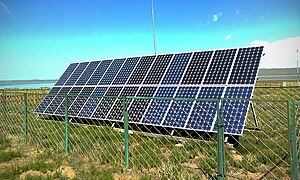
Solar
Kurt Jones, Chaffee and Park County Colorado State University Extension  Director, spoke about the benefits and drawbacks of solar thermal, photovoltaic, and passive solar design. He emphasized the care of the building structure that has potential for solar energy. If work would need to be done to the building within the next ten years, he suggested doing the work before installing a solar system, as well as any energy efficient upgrades. Completing the energy efficient upgrades before any renewable energy enters the equation is a benefit because the size of a system could be smaller if a building is operating as efficiently as possible. Find more information on the CSU website or contact Mr. Jones directly at 719-395-5493.

A tip for farmers in the winter: Paint the south facing side of the stock tank black to absorb the suns energy and keep ice from forming. 

Hydro Power
Hydro power is producing electricity with running water. There are a few initial questions to ask to determine if you have a good/economical site. First, what are the hydraulic conditions, or how is the water moving? What is the head or how much distance is between the starting point of the water flow to the end point? These starting and end points are often in the middle of the water way. Height decreases, such as water falls are good examples of this. Measure the distance between the top of the water fall where the grade evens out. Check the flow rate, or how fast the water is moving, and assess how long the water moving at that rate. Another point to assess is wildlife habitat. Would a turbine negatively affect fish or other wildlife habitat?

Once these basic questions are answered, it’s time to call in a professional. Colorado specifically has been designated with high potential for hydro power. There are many water ways winding throughout this state that are just waiting to be utilized.

Now all this made hydro power sound easy, but it’s not. Obtaining permits and jumping through all the right hoops can make this process arduous. There are funding opportunities that include feasibility and construction funding, and tax credits. If you think you have a good site for hydro power, contact Lindsay George at (970) 945 – 9686 with Applegate.

Biodiesel
Biodiesel is the byproduct of a byproduct. So a farmer grows some soy beans, harvests them, presses them, then uses the soy meal for his animals. The oil is left over from pressing them. That oil can be taken and converted into fuel for the farmers tractors. Biodiesel is better for the environment because it’s free of sulfates and has a lesser amount of nitrates then crude oil or petroleum. You can grow your own crops for biodiesel or you can gather the waste grease from restaurants.

Did you know you can “wash and dry” biodiesel? In fact, it’s necessary. It’s an important part of the process where water and biodiesel are put into the same container for at least 12 hours. When a successful wash has taken place the biodiesel will be at the top of the container, with the water at the bottom. If this separation hasn’t occurred you basically have soap. The drying process is letting that water be evaporated so you are only left with pure biodiesel. Find a more comprehensive description of the process here: http://www.make-biodiesel.org/.

4CORE and Colorado State University Extension and Research Centers have lots of information and are always willing to help guide you in the right direction when looking into renewable energy applications.

www.fourcore.org
http://www.ext.colostate.edu/index.html 

About the Author: 
Heather Wyatt recently received her Bachelor's Degree from Fort Lewis College in Psychology. She thoroughly enjoys people and is excited to see all the different ways the Weatherization Program will help others.  She has experience in managing small businesses and working with people from different backgrounds.  She enjoys watching movies and working in the yard on weekends.